
-

How Social Media Was Flooded With False News After Nepal’s Gen Z Protests
When Nepal’s Gen Z protests erupted in early September, social media quickly became the main source of falsehoods. Misinformation spread faster than credible news, fueling confusion and distrust. From rumors of fleeing politicians to exaggerated claims of violence, the flood of false content left fact-checkers scrambling to debunk falsehoods.
-

Fact-check: Claims of Sand Dredgers Crashing Into a Bridge in Nepal Floods Are Misleading
A viral video claiming to show sand dredgers crashing into a bridge during recent floods in Nepal is misleading. A fact-check revealed that the footage is from Vietnam, depicting the flooded Chay River following Typhoon Yagi in September 2024.
-
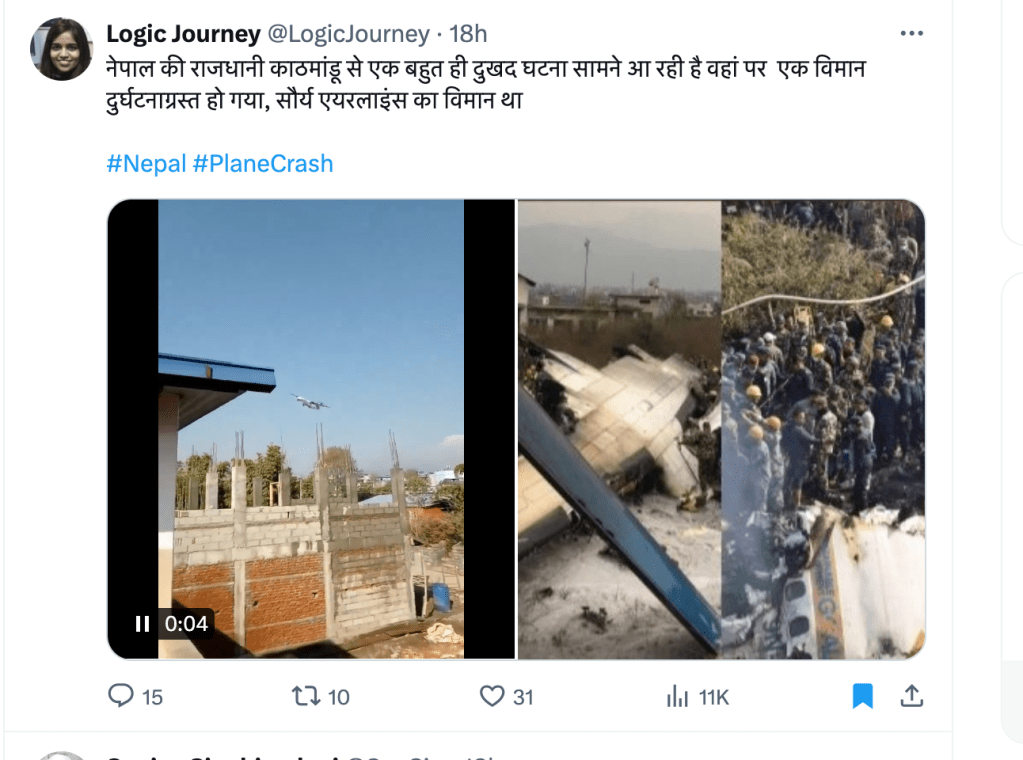
Old Photos and Videos Falsely Shared Following Deadly Nepal Plane Crash
A Saurya Airlines plane crashed in Kathmandu on July 24, 2024, killing 18. Social media users falsely shared old photos and videos of previous plane crashes in Nepal as footage of the incident. Fact-checks reveal the shared content is unrelated to the Saurya Airlines crash.
Nepal CHeck Explainers
-
How Social Media Was Flooded With False News After Nepal’s Gen Z Protests
When Nepal’s Gen Z protests erupted in early September, social media quickly became the main source of falsehoods. Misinformation spread faster than credible news, fueling confusion and distrust. From rumors of fleeing politicians to exaggerated claims of violence, the flood of false content left fact-checkers scrambling to debunk falsehoods.
-

Social media is flooded with AI-generated images. Here’s how to detect them
After the Jajarkot earthquake, AI-generated images flooded social media, depicting false scenes of devastation. Shared by influencers and organizations, these convincing yet fabricated images posed challenges for fact-checkers. Experts recommend skepticism, visual clues, and context analysis to discern AI-generated content, highlighting the growing complexity of misinformation online.
-

Falsehood follows floods and landslides in Nepal
Misinformation surges during Nepal’s monsoon season, as people turn to social media for disaster information. Throughout the season, dramatic images and videos were frequently shared inaccurately. Experts stress the importance of strong risk communication strategies to provide accurate information and avoid confusion, especially during crises.

Factchecks – Explainers – Watch
Welcome to Nepal Check
We are a fact-checking platform. We fight bad information. We identify and debunk misinformation. We verify claims made by public officials. We also publish credible and accurate reports and explain complex issues in simple terms.

 NepalCheck.Org